We are an Indigenous-led coalition of activists and community leaders who are concerned about the rising tide of colonization that is accelerating development and extraction across the country, while eroding workers’ rights and attacking the status of immigrants and refugees. At this critical political moment, we can turn the tide before it’s too late, but only if we work together.
As we build our capacity, we are committed to developing a movement rooted in care—for people, for the land and waters, for a restorative economy. This is our power.
In this Update:
Updates on Legislation

The Bad 5s
Nine First Nations are taking the Ontario and Canadian governments to court for Bills 5 and C-5. They are challenging the constitutionality of these bills and seeking an injunction that prevents the use of certain clauses of the legislation.
Passed with only seven days of notice and two days of consultation with civil society and Indigenous groups, Bill C-5: The Building Canada Act, is moving ahead at rapid speed. Prime Minister Carney announced that the Major Federal Projects Office will be up and running by Labour Day.
In response to criticism of the bill, the Prime Minister held a summit from July 17-18 in Gatineau, Quebec on Bill C-5 with Indigenous leaders from across the country. It was a hot-mess-express by all accounts. When he returned, Hereditary Wet’suwet’en Chief Na’Moks spoke to the media about what he called the concerning repetition from Carney that, “this is the law of the land,” insinuating that standing up against Bill C-5 rendered them criminal. Chief Na’Moks also released a statement with Gwii Lok’im Gibuu (Jesse Stoeppler). In a powerful video produced by Dogwood Institute, many Indigenous leaders, such as Ramon Mahegkan Kataquapit (Attawapiskat-Taino), Jeronimo Kataquapit (Attawapiskat), Gwii Lok’im Gibuu (Jesse Stoeppler), and Chief Na’Moks (Wet’suwet’en) spoke out about the bills and their determination to stop them. Grave concerns were also expressed by the Union of BC Indian Chiefs, as reported in a scathing review by Robert Jago in the Narwhal.
Grassroots opposition to Bill 5 in Ontario continues to grow, especially among youth in the north of the province. First Nations youth are walking from Timmins, Ontario to Queen’s Park to protest the Bad 5s. Their group is called Mahmo Inninuwuk Wiibuseegostamok, a James Bay Cree phrase that means ‘Uniting the People to Stand Together.’ They have a Facebook page so you can follow them here. The youth have been joined by elders from Attawapiskat and Moose Cree First Nations. They will be rallying next week in North Bay—a place that’s seen great activism against the legislation—among other towns like Chatham-Kent and Thunder Bay.
Over 100 demonstrators representing a broad range of movements — labour unions, Indigenous communities, healthcare workers—rallied at the intersection of Highway 60 and Centre Street in Huntsville.
Bill C-2: Mass Cancellations of Protective Immigrant Status

This interview in Macleans with lawyer Julia Sande is an excellent overview of the harms of Bill C-2 to Canada’s immigration system. Some highlights:
The bill would let the government cancel or suspend certain immigration documents (like permanent resident visas or work and study permits) en masse without individualized assessments.
Bill C-2 introduces a one-year bar for refugee claims; this means they will no longer have their case heard by the Immigration and Refugee Board, but instead be subject to a Pre-Removal Risk Assessment, which can’t stop deportation and there’s no right of appeal.
They’re expanding the ability for police and spy agencies to demand information without a warrant — based merely on “reasonable suspicion.”
See the Migrant Justice Network’s overview of the pending legislation.

BC’s New Bills 14 and 15
In this recent piece in The Breach, Janelle Lapointe breaks down Bill C-5, Ontario’s Bill 5, and BC’s Bills 14 and 15 and the politics of “economic reconciliation.”
Our analysis of Bill 14 shows how it accelerates the permitting of renewable energy development in the province. The streamlining of these projects will stem from their exemption from existing environmental law and regulation, including the Environmental Assessment Act. It also vests more power in the British Columbia Energy Regulator, making the organization the ‘single-window’ through which projects pass for approval.
Our analysis of Bill 15 shows how the Infrastructure Act legislation grants the province power to fast-track approvals for any public or private major infrastructure project. This legislation could lead to severe project mismanagement and weakened environmental protections. Its vague language allows future governments to accelerate the approval of any other extractive infrastructure deemed important without clearly defined criteria.
In part 4, “Streamlining Designated Projects,” the legislation allows private consultants to issue project certifications instead of environmental regulators. Critics, including the UVic Environmental Law Centre, have raised alarm for over a decade about conflicts of interest in BC’s Qualified Professional system, where proponents hire their own scientists to conduct project studies. Bill 15 removes the limited existing oversight, effectively privatizing permitting by enabling proponent-paid consultants to approve their own projects.
Actions and Ways to Support
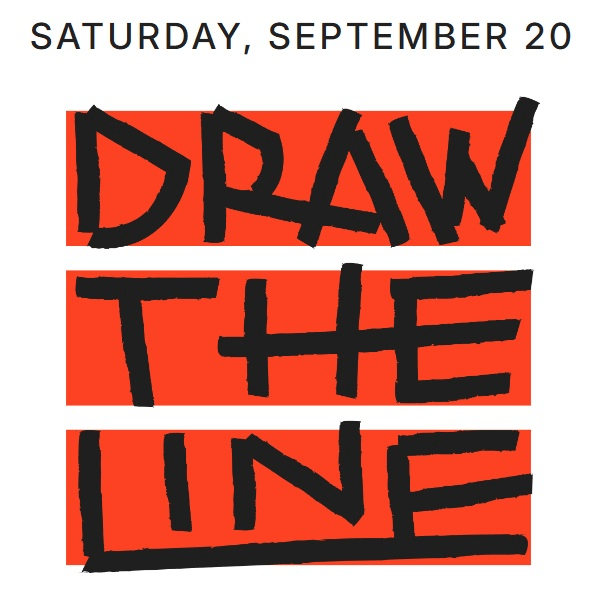
8th Fire Rising will be participating in the September 20 Day of Action: Draw the Line. We are engaged in the planning process and will update soon. Sign up through the Draw the Line website to stay involved.
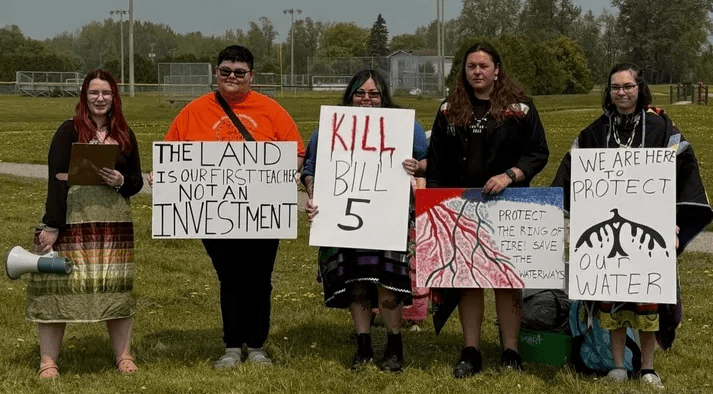
Support the Youth Rising Together—a grassroots collective of Indigenous youth from across Northern Ontario, who are rising “to protect our rights, our voices, and our future in the face of two harmful pieces of legislation: Bill 5 and Bill C-5”—by contributing to their fundraiser.
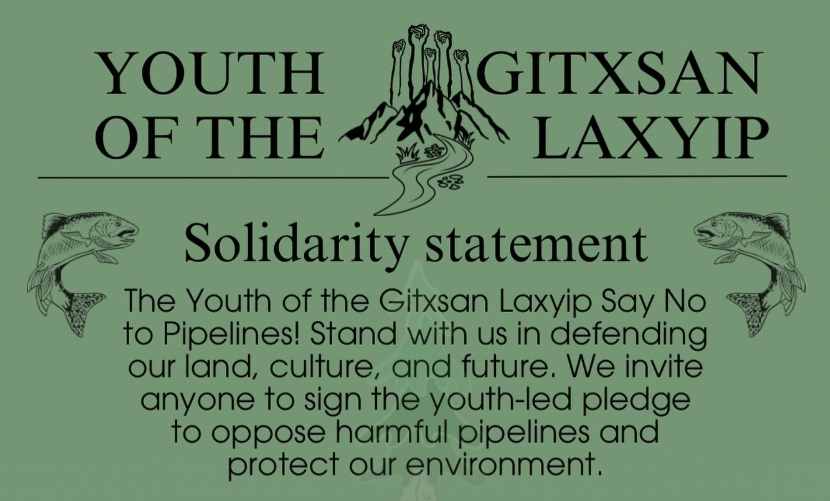
The Youth Gitxsan Firekeepers of the Lax’yip put out a statement, asking people to sign their pledge to protect the lands and waters from pipelines. You can read the full statement here, and watch another video with more information about them and the campaign here.