A coalition against Carney’s attack on Environment, labour, and indigenous rights
INJUNCTIONS
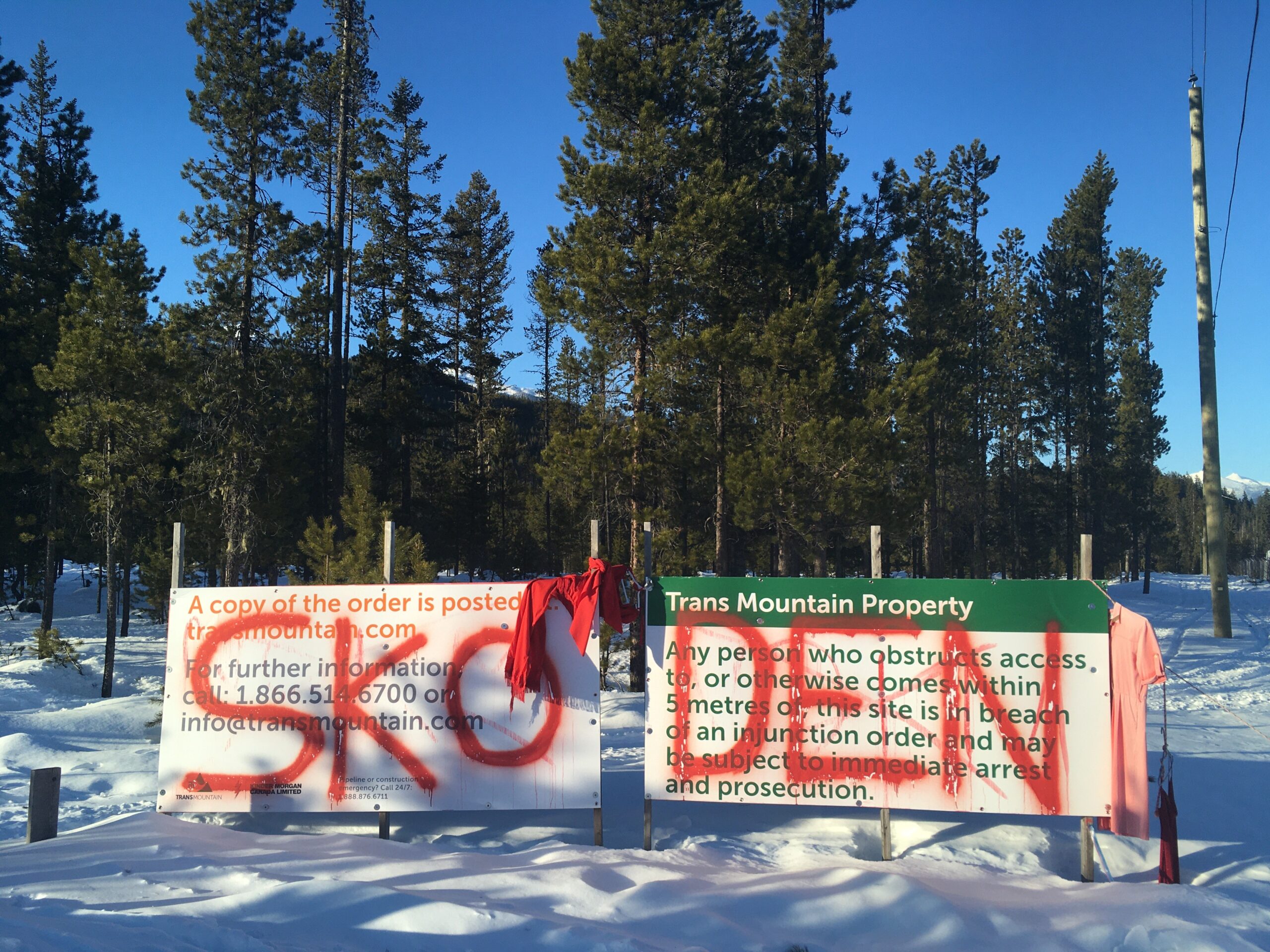
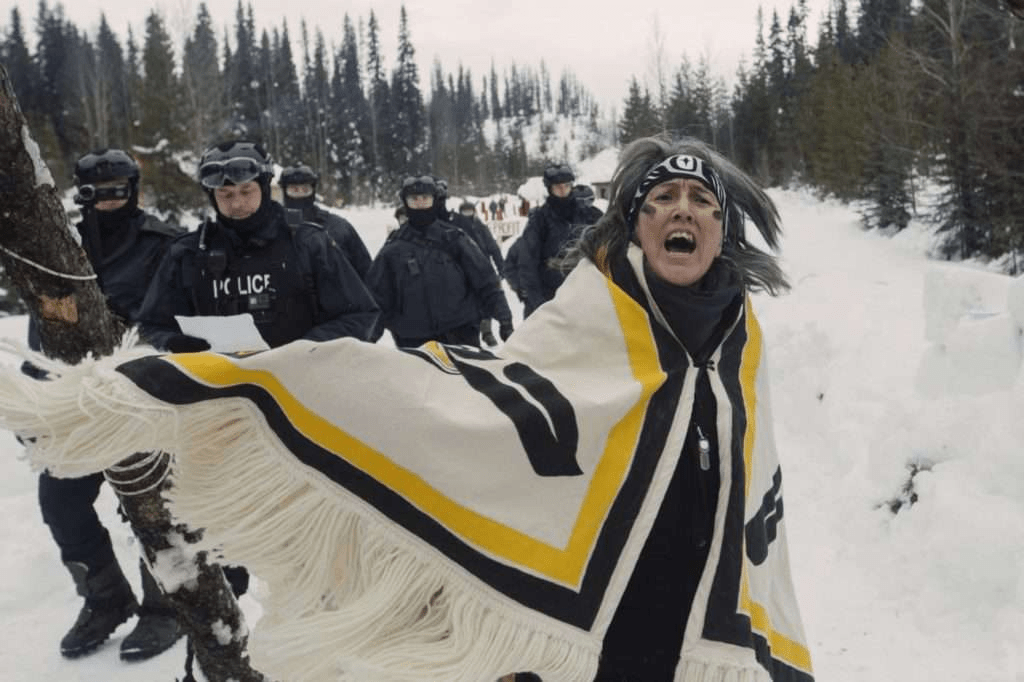
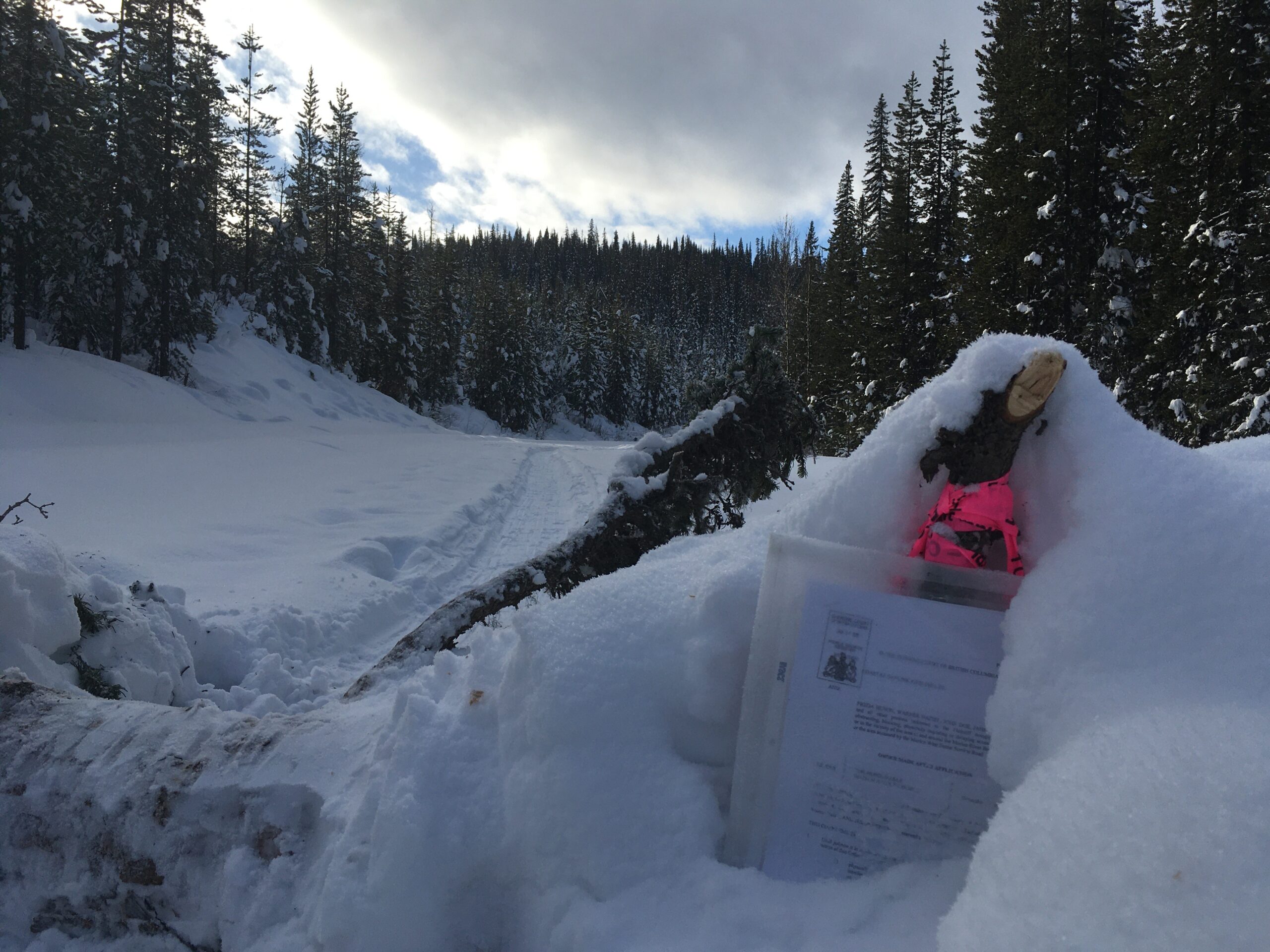
Injunctions — court orders prohibiting certain actions — are commonly used to police movements for Indigenous sovereignty and environmental justice. In preparation for the fight against the flood of legislation that aims to dispossess Indigenous communities and fuel corporate power, we’ve put together a set of resources on injunctions. These cover the basics of injunctions for activists and land defenders, injunctions and policing, connections between injunctions and Indigenous rights and title, the threat of “zombie injunctions”, and the use of urban injunctions and homeless encampments. Understanding this powerful legal tool is crucial because corporations and governments wield injunctions extremely effectively, far outpacing the success rate of First Nations looking to assert jurisdiction or enforce rights:
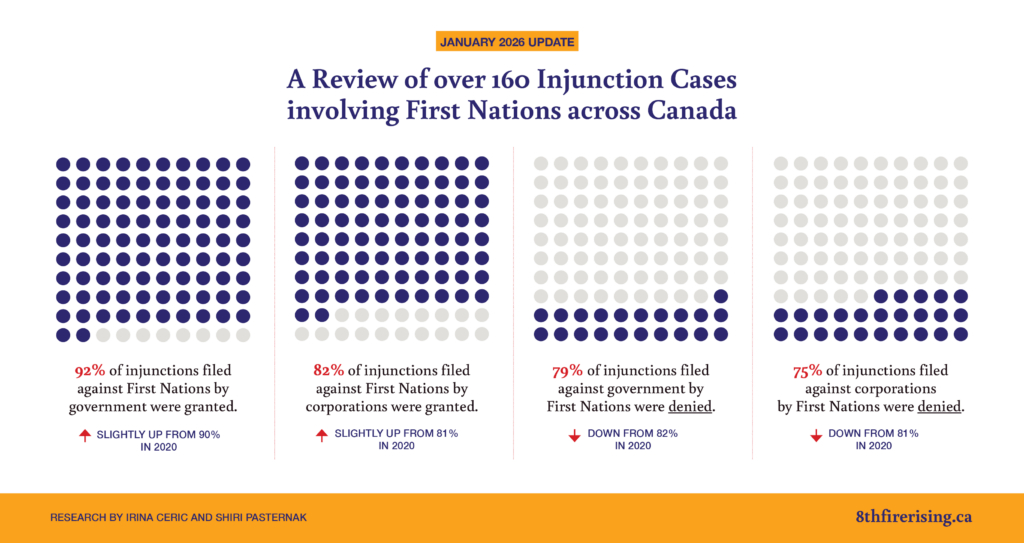
This is an update of our research on injunction success rates first published in 2019 and updated a year later. Using a database of cases beginning in the 1970s, we track the percentage of injunctions granted and denied in applications filed by First Nations, corporations, and governments. Despite the larger pool of cases we can now draw from, including applications decided since 2020, the statistics have remained remarkably consistent. Corporations and governments continue to be far more successful in obtaining injunctions against First Nations across cases involving resource extraction, exercises of treaty and constitutional rights, and the duty to consult. Only one category — First Nations versus Corporations — saw a small but significant shift as the success rate for injunction by applications by First Nations increased from 19% to 25%.
Click here to download a PDF of our Injunctions Statistics.
Learn more about injunctions by reading our posts below.