Click here to download a PDF version of Neskantaga First Nation’s Written Submission on Bill 5.
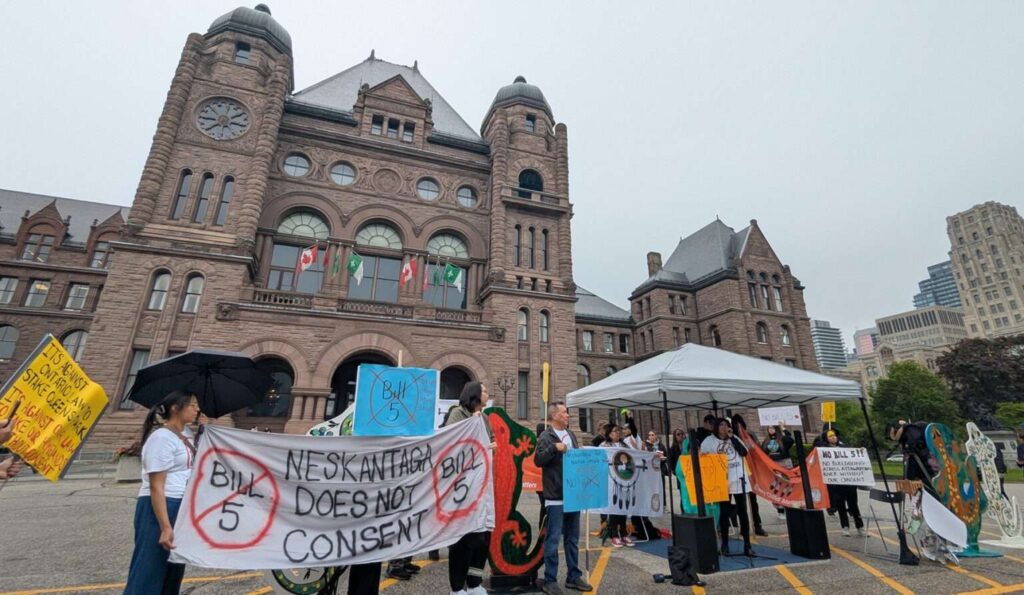
The Chief and Council of Neskantaga First Nation, on this 26th day of May 2025, issue the following statement as a formal written submission to Ontario’s Standing Committee on the Interior on the proposed Bill 5 “An Act to enact the Special Economic Zones Act, 2025, to amend the Endangered Species Act, 2007 and to replace it with the Species Conservation Act, 2025, and to amend various Acts and revoke various regulations in relation to development and to procurement”.
1. Overview of Neskantaga First Nation’s Position on Bill 5
We object to:
• the cancellation of the Environmental Assessment for Eagle’s Nest;
• the establishment of Special Economic Zones (SEZ); and
• the changes to the Endangered Species Act and the Heritage Act.
Bill 5 is a blatant attempt by Ontario to avoid its duty to consult and accommodate Neskantaga First Nation and other affected First Nations in the Ring of Fire area, and is an attempt to overwrite Ontario’s obligations flowing from Treaty No. 9. We demand that it be withdrawn.
Neskantaga First Nation is a remote community located about 560 km north of Thunder Bay, on the shores of Attawapiskat Lake. The community consists of approximately 550 registered members, with approximately 357 living on reserve. The reserve is only accessible by air for a majority of the year, and in the winter is accessible by ice road. Recent climate change has limited winter road viability to only five to seven weeks a year.
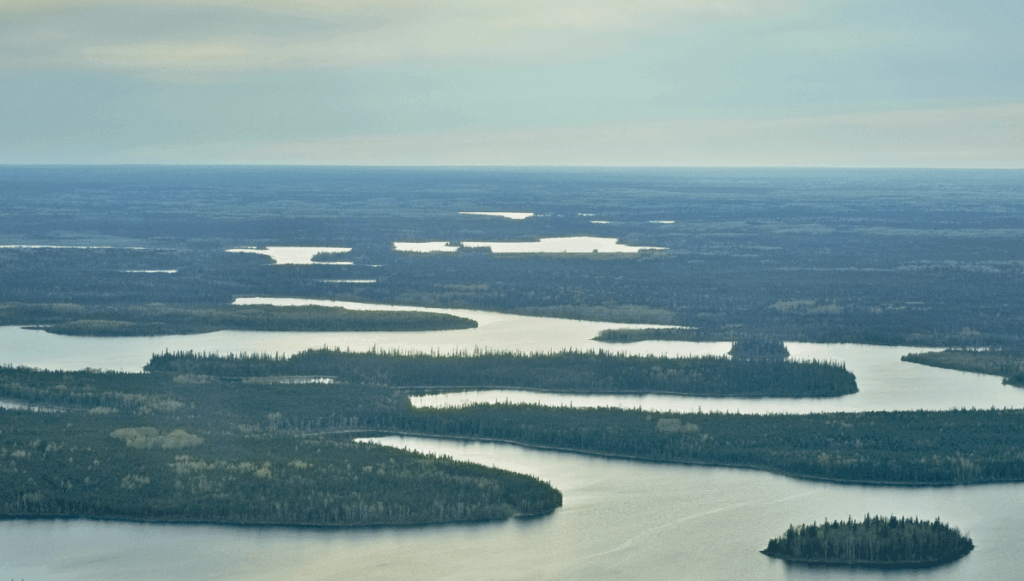
We are Anishinaabe people, with a legal tradition that includes responsibility and stewardship for all of our homelands in the Attawapiskat River watershed. We are recognised as Aboriginal peoples within the meaning of s.35 of the Constitution Act, and have the capacity of a “Band” within the meaning of the Indian Act. Our First Nation is a treaty partner with the Crown under Treaty No. 9. We have never ceded, sold, or surrendered our homelands, and have never given up jurisdiction in relation to lands, waters or peoples.
Neskantaga faces an ongoing social emergency, including a high cost of living, a severe housing shortage, and a lack of access to basic services such as for health, mental health and wellbeing. Our community has been on a boil-water advisory for over 30 years – the longest in Canada. Vulnerable members of our community are currently evacuated as a result of the recent flooding of the health center.
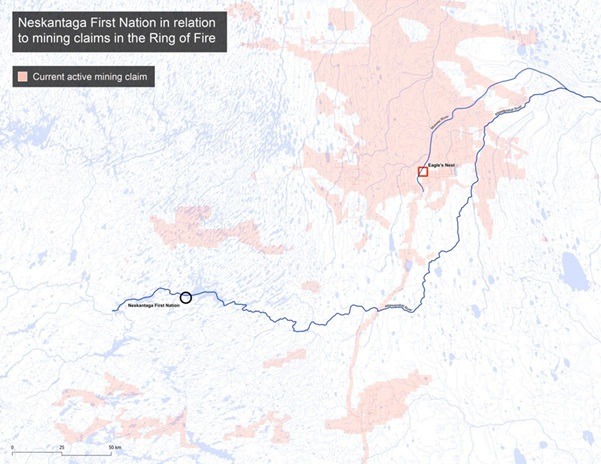
Neskantaga is deeply concerned with plans for “fast-tracking” the development of mining and associated infrastructure in the Ring of Fire, which is in close proximity to our homelands along the Attawapiskat River [see map in Appendix 1]. We are particularly concerned with the potential ecological, social and cultural impacts of the proposed development, and with the Ontario government’s lack of meaningful consultation with us regarding these plans.
2. The Authority to Make Decisions About Our Homelands Rests With Us
We, the Anishinaabe people of Neskantaga First Nation live on the headwaters of the Attawapiskat River. It is the lifeline of our community. Our traditional and ancestral lands are all around us. They go in all directions from our reserve to the north, south, east and west. We use the whole river to hunt, fish, trap and as a means of transportation. It is the most vital source of health and life to our people. We assert Aboriginal rights and title over our entire homelands.
Our understanding of Treaty No. 9 is that we entered into a legal relationship with the Crown based on principles of friendship, mutual respect, and shared arrangements. In exchange for our promise to keep peaceful relations, the Crown promised to protect both our livelihoods and our jurisdiction over the land as times changed. We did not cede, sell, or surrender our homelands, nor did we give up our inherent rights or jurisdiction by entering into the Treaty.
We understood that we would share the use of our lands and resources with newcomers, so long as our rights to hunt, fish, and use our lands would be respected and protected. We continued to recognize our obligation to protect these lands as stewards, which has existed since time immemorial. Because of the importance of our lands, our obligation to protect them, and the Crown’s promise to respect our jurisdiction, any decisions affecting our homelands and way of life must go through our authority.
The Ontario government is constitutionally required to consult and accommodate us, and to obtain our free, prior, and informed consent (FPIC) for projects that can fundamentally change our way of life. To be clear, Neskantaga is not inherently “anti-development.” However, we insist that our community consensus decision-making process be respected any time there is proposed activity which may have an impact on our homelands.
Our community consensus decision-making process stems from our own Anishinaabe legal order. Our Community Protocol contains the principles that apply to any consultation process at Neskantaga. This Protocol has been shared with Ontario and with project proponents seeking to initiate development in our homelands in the Ring of Fire. Among other principles, it clearly states that (1) Neskantaga’s internal consensus-based decision making process must be respected; (2) this internal decision-making process requires time, information, and resources, in order to make a fully informed decision, in the form of a community resolution; (3) the decision-making process cannot be rushed; it must take place in-person, in the community’s Anishinaabe language, with elders present; (4) the community’s designated representatives are responsible for communicating to project proponents any concerns or feedback arising from that community process; and (5) representatives of project proponents will only be invited to attend at the community once they receive permission to do so.
To meet the standard of meaningful consultation with us, the Ontario government must respect and follow our protocols for consultation. Virtual consultation, or superficial attempts that do not follow our protocol are not sufficient. We would also note that consulting with other First Nations in the area does not in any way equate to having consulted with us. Neskantaga are not mere stakeholders in the Attawapiskat watershed or Ring of Fire region. These are our lands, governed by our laws. Our authority must be respected by the Province of Ontario, and decisions about development on our lands must pass through us.
A recent Federal Court decision in Kebaowek First Nation v Canadian Nuclear Laboratories (FC 2025), ordered a federal regulator to resume consultation with an affected First Nation “with a view to implementing the [FPIC standard in the United Nations Declaration on the Rights of Indigenous Peoples] in a robust manner, by adapting its processes to address Indigenous laws, knowledge and processes and to develop a process that is aimed at reaching an agreement” (Court’s Judgment, para. 2). Justice Blackhawk stated: “Process rights must be considered from the perspective of the rights holding collective and must consider the customs, traditions, and laws of the Indigenous rights holders” (at para. 139).
Applying this ruling, Ontario must seek our free, prior and informed consent for any major developments proposed for our homelands and Ontario must develop a process that is compatible with our own laws.
We have heard Crown Ministers say that nothing in this Bill will detract from their ability to fulfil the Crown’s Duty to Consult and Accommodate. In fact, we believe this Bill is designed specifically to side-step the duty.
3. Neskantaga Opposes Schedule 3, the Cancellation of Environmental Assessment for the Proposed Eagle’s Nest Mine
We are opposed to Schedule 3 of Bill 5, which unilaterally terminates the agreed upon environmental assessment for the Eagle’s Nest Mine. Approval of the Eagle’s Nest mine without environmental assessment is reckless and will cause substantial harm to Neskantaga First Nation’s culture and way of life.
In practice, environmental assessment has served as the primary vehicle for Indigenous communities and the public to learn about proponents’ plans in detail. It provides a structure for questions to be answered and concerns to be raised and accommodated, if possible. It provides a venue through which communities can voice or withhold their consent.
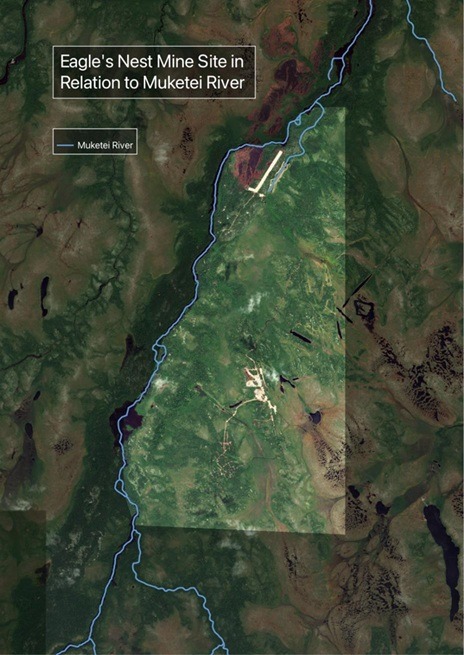
Bulldozing ahead with the Eagle’s Nest mine without proper environmental assessment poses a grave threat to Neskantaga’s Treaty rights and way of life. The Eagle’s Nest mine is proposed to be located directly beside the Muketei River [see map in Appendix 2]. The Muketei is expected to absorb the mine’s wastes and flows into the Attawapiskat River. To be viable, the Eagle’s Nest mine requires a major industrial road across the peatlands and a major bridge to cross the Attawapiskat river. These developments gravely endanger our way of life.
We have a right to sustain ourselves within our homelands. In the summer, our members catch a variety of fish and bird species from the Atttawapiskat river. We also hunt and trap animals on the lands surrounding the river. Our ability to do this will be negatively impacted by development of the Ring of Fire, particularly if this development occurs without any assessment of the ecological, social and cultural risks it may pose. Wyloo Metals has already publicized plans to build a nickel mine extending to 1.5km deep — employing untested, experimental methods. The fact that Ontario is willing to allow this activity to threaten our homelands in an unfragmented boreal peatlands ecosystem without any regard for understanding its potential adverse effects is appalling.
Besides the obvious threat of construction and mining activity disrupting wildlife habitats and behaviour, the roads and bridges needed to access the mine will permanently bring with them a greater number of outsiders into the Attawapiskat watershed. These outsiders may hunt or fish in ways that violate Neskantaga’s rights, or cause harm to sacred sites. Furthermore, there is the simple fact that Neskantaga will lose the ability to harvest as usual throughout our homelands. Finally, in the long run, unchecked pollution from mining effluent, emissions from vehicles, and petroleum/chemical spills or leakages will pollute the Attawapiskat watershed and surrounding lands and further infringe on Neskantaga’s right to sustain ourselves on our homelands. These are clear violations of our Treaty rights for which Ontario must seek our consent.
We have undertaken a Lake Sturgeon stewardship program, Namekaa Gaagige, in recent years in order to fulfil our own obligations to protect the Lake Sturgeon under Anishinaabe law. The Lake Sturgeon are our relatives, and one of the most culturally important species of fish to our people. Although the population of Lake Sturgeon in the Attawapiskat watershed is among the healthiest in Ontario, they are gravely threatened by the proposed developments.
The Ontario government’s attempt to cancel the environmental assessment for the Eagle’s Nest mine means that Ontario hopes to undermine our stewardship efforts and circumvent our decision-making protocol. The government wishes to negate our ability to have any say in whether Eagle’s Nest goes ahead or not. We were not consulted about the termination of the environmental assessment agreement, nor did we consent. In proposing this change, the Ontario government is shirking its duty to consult and accommodate Neskantaga First Nation and is violating Treaty No. 9. This Schedule is unconstitutional, and should be removed in its entirety.
4. Neskantaga Opposes Schedule 9, the Establishment of Special Economic Zones (SEZs)
Neskantaga is also opposed to the establishment of Special Economic Zones (SEZs) as outlined in Schedule 9 of Bill 5. In making this proposal, Ontario is attempting to set up lawless “sacrifice zones” within the province where the usual environmental and heritage protections do not apply. These zones have been proposed to allow private interests to do as they please without oversight, which is deeply problematic. The Bill employs the vague terminology of “trusted proponents” and “vetted projects”, and says the Minister of Energy and Mines will be empowered to develop regulations to detail which specific laws will not apply in the zones. The fact that the vetting criteria and process for setting out the boundaries of these zones is to be decided in later regulations leaves the Ontario government with the ability to unilaterally exempt whatever projects it chooses from the law. Ontario wishes to give the Cabinet the power to do this without meaningful public oversight, allowing it to ignore environmental and heritage preserving obligations that would otherwise need to be fulfilled.
We say very clearly: there will be no “constitution-free zones” in Ontario. We will not allow our homelands to be sacrificed for Ontario’s gain.
Further, there can be no zones carved out from within Treaty No. 9 in which Ontario is allowed to duck its obligations under the Treaty. This attempt to do so breaches the Honour of the Crown. Treaty No. 9 applies to all of the land within its borders: Ontario cannot create specific lawless zones. Ontario’s obligations under both Treaty No. 9 and the Canadian Constitution will survive any attempts by the legislature to strip them away. This position will be supported by Canadian courts.
The Crown’s duty to consult and accommodate Neskantaga, and its obligations under Treaty No. 9 cannot be legislated out of existence. They will survive the provisions found in this Bill. Schedule 9 is a cynical and underhanded attempt by Ontario to avoid fulfilling these fundamental commitments. These commitments are not “red tape”: They are relationships that need to be maintained to uphold the Honour of the Crown. This Schedule is a bald attempt to undermine our jurisdiction over our homelands, and our right to be sustained by them. This Schedule must be removed from the Bill in its entirety.
5. Neskantaga Opposes the Repeal of the Endangered Species Act and the Heritage Act Provisions
Bill 5 contains a host of other changes to existing environmental protections in Ontario that have the potential to seriously exacerbate the damage caused by the lack of environmental assessment for Eagle’s Nest and the creation of SEZs.
For example, repealing the Endangered Species Act as called for in Schedule 2 is another cynical move which will endanger one of the most important species of fish to our people, the Lake Sturgeon. As mentioned, although the population of Lake Sturgeon in the Attawapiskat watershed is among the healthiest in Ontario, it is still considered to be a species of Special Concern. These fish reproduce and mature very slowly, require unimpeded migration routes and spawning grounds, and are very sensitive to changes in water quality and turbidity.
Furthermore, the Neskantaga community relies on the sturgeon as a source of food and as culturally significant relatives they have protected and cared for since time immemorial.

The original Terms of Reference for environmental assessment for the Eagle’s Nest Mine anticipated the possibility of major disruptions to sturgeon habitats throughout the Attawapiskat and Muketei River watersheds. With Bill 5, the termination of the EA agreement for Eagle’s Nest Mine combined with the removal of protections in the Species Conservation Act, will threaten the population of Lake Sturgeon in the region. Enforcement powers to prevent disruption of habitat and individual animals have been neutered in Bill 5, and the Ontario government has given itself the ability to permit the killing of endangered species. There is a high likelihood that the Lake Sturgeon population in the Attawapiskat River will be drastically reduced by mining and associated road-building activities. This harm is seemingly both anticipated and tolerated, if not encouraged, by Ontario by the measures it has taken in Bill 5.
Amendments to the Ontario Heritage Act made in Schedule 7 of Bill 5 are another serious concern. Bill 5 introduces a new provision to allow Cabinet to exempt certain properties from the requirement to conduct archaeological assessments, whenever Cabinet is of the view that the exemption might advance government priorities. Removing archaeological examination
from proposed projects leaves Neskantaga’s cultural sites, such as burial grounds and ceremonial sites in serious danger. Many of these sites are located along eskers, which are natural formations of elevated gravel common in the Ring of Fire area. These eskers will likely be used as a source of gravel for the construction of access roads for the Ring of Fire. Without proper archaeological assessment, these significant cultural sites could be utterly destroyed. Indigenous Peoples’ cultural heritage, including sacred grounds, are constitutionally protected in Canada. Canadian courts have affirmed that these sites of Indigenous spiritual significance are covered by the constitutional duty to consult and accommodate. Any exemption to archaeological requirements that might affect Indigenous People’s cultural heritage, without meaningful prior consultation and accommodation of affected Indigenous Peoples, will be challenged and is likely to be overturned on judicial review.
6. Neskantaga’s Position on Bill 5 is Supported by Canadian Courts
Despite Ontario’s attempts in this Bill, the province will not be let off the hook when it comes to its constitutional obligations to Indigenous Peoples. Under section 35 of the Constitution Act, 1982, Ontario still must meaningfully consult with Indigenous communities that could be impacted by any proposed project, action, or decision. If those communities raise concerns, Ontario must make space to address and accommodate them. This is a constitutional duty, confirmed by the Supreme Court of Canada in the 2004 Haida Nation trilogy and reinforced in every Supreme Court case since that deals with Indigenous rights.
This duty is owed by the Crown to the Indigenous Peoples of Canada, and it stems from Canada’s recognition that Indigenous Peoples controlled Canada’s lands and resources prior to the Crown’s assertion of sovereignty over them. The Crown’s duty requires them to treat Indigenous Peoples fairly and honourably, and to protect them from exploitation. The Crown’s duty to consult and accommodate cannot be legislated out of existence by the Province of Ontario. Despite Ontario’s desire to “fast-track” resource development projects, any legislative change that threatens to unilaterally interfere with Neskantaga’s rights and interests will be found to be unconstitutional.
Additionally, obligations exist in International Law, such as the United Nations Declaration on the Rights of Indigenous Peoples (UNDRIP), which require governments to obtain the free, prior, and informed consent (FPIC) of Indigenous peoples before implementing projects or legislative measures that may seriously affect them. The Province of Ontario must consult and cooperate in good faith with Indigenous Peoples to obtain their FPIC before adopting any legislative or administrative measures that may affect Indigenous Peoples’ rights, or approving any project that affects Indigenous lands (UNDRIP, ss.19 and 32(2)).
As such, the proposed termination of the Environmental Assessment Agreement for Eagle’s Nest and the creation of SEZs — designed to allow the Province to side-step meaningfully engaging with Neskantaga in respect of the Ring of Fire — puts Ontario in direct violation of International Law and of Canada’s international obligations. Again, it was recently affirmed in the Kebaowek decision that the UNDRIP is now a part of the law of Canada. As such, it informs the interpretation of the scope and content of the duty to consult and accommodate.
To conclude, Neskantaga maintains jurisdiction in our homelands. We have never surrendered, ceded, or sold our lands to Ontario, nor to anyone else. Our rights have not been stripped from us. Once again, we are not opposed to development. However, we are also obligated to protect our homelands, and wish to continue to sustain ourselves from the land. This means that we must vehemently oppose development occurring without our approval.
We want to remind Ontario that Canadian courts frequently find in favour of First Nations in cases where the Crown does not act honourably. These cases are lengthy and expensive, often resulting in projects being abandoned. Do not think of us as stakeholders, or as an obstacle to be avoided. These are our homelands, and we control what happens on them. The only way to avoid “red tape” when it comes to extracting resources on our lands is to fully obtain our Free, Prior, and Informed Consent.
The changes proposed in Bill 5 are intolerable to Neskantaga and will be fought at every step of the way. Once again, we expect the full support of the Canadian courts behind our efforts.
Appendix 1
Appendix 2