Compiled by: Shiri Pasternak, with contributions from UVIC’s Environmental Law Centre Clinic students
What is the role of police in the enforcement and interpretation of injunctions?
1. The Role of the Critical Response Unit (CRU-BC) and Private Security in Injunctions
Public and private security forces play a critical role in the surveillance of land defenders and the violence inflicted upon them during land defence activities. This section will describe the government-directed RCMP security force responsible for a number of high profile responses to land defence activities. We will examine the government’s rationale for creating this security force, the legislation it relied upon to do so, and the relationship between private security and CRU.
What is CRU-BC?
The BC provincial government and the federal government created the Community-Industry Response Group (‘C-IRG’) in 2017 to manage resistance to the construction of the Coastal GasLink (CGL) pipeline and the expansion of the Trans Mountain pipeline. Their mandate expanded over time to cover all protest-related activity in relation to the energy sector and extraction, including logging at Fairy Creek and other flashpoints throughout the province. On January 1, 2024, the Province and federal government renamed the C-IRG as the Critical Response Unit (the “CRU-BC”) to “better reflect the scope of work and service that its members are called to.”
In practice, the C-IRG structure is a massive volunteer redeployment scheme. Located within “E” Division of the RCMP, its Gold-Silver-Bronze (GSB) command structure organizes and executes this co-ordination across regional detachments. RCMP officers from all detachments and districts are organized through the GSB command to provide police intelligence, liaison with community for intelligence and de-escalation purposes, and provide support on the ground when protest activity – or assertions of Indigenous jurisdiction – might disrupt infrastructure like pipelines. Documented examples of CRU “responses” include arrests, pepper-spraying, physical violence, and threatening journalists who try to document events.
Records show intelligence sharing for C-IRG operations also happens across the provincial government. This information-sharing includes assistant deputy ministers’ “liaison civil unrest” meetings and “critical incident” conference calls, hosted by the Public Safety and Solicitor General’s Office. CRU are also involved in these cross-provincial discussions concerning the fast-tracking of projects and infrastructure under provincial streamlining bills.
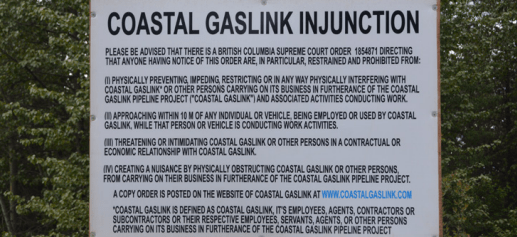
In addition, private security personnel collaborate with CRU-BC and industry actors to share information. Companies like Forsythe Security Consultants have engaged in intimidation, harassment, infiltration and unlawful surveillance of land defenders. APTN reported that a C-IRG officer relied on a Forsythe guard’s notes in court to “beef up” a case against Chief Dsta’hyl, a hereditary chief of the Wet’suwet’en nation in the conflict with Coastal Gaslink. In a civil suit filed against the province, RCMP, and private security, another C-IRG officer revealed at trial that he solicited legal advice from CGL’s law firm on how to produce affidavits and set bail conditions for land defenders.
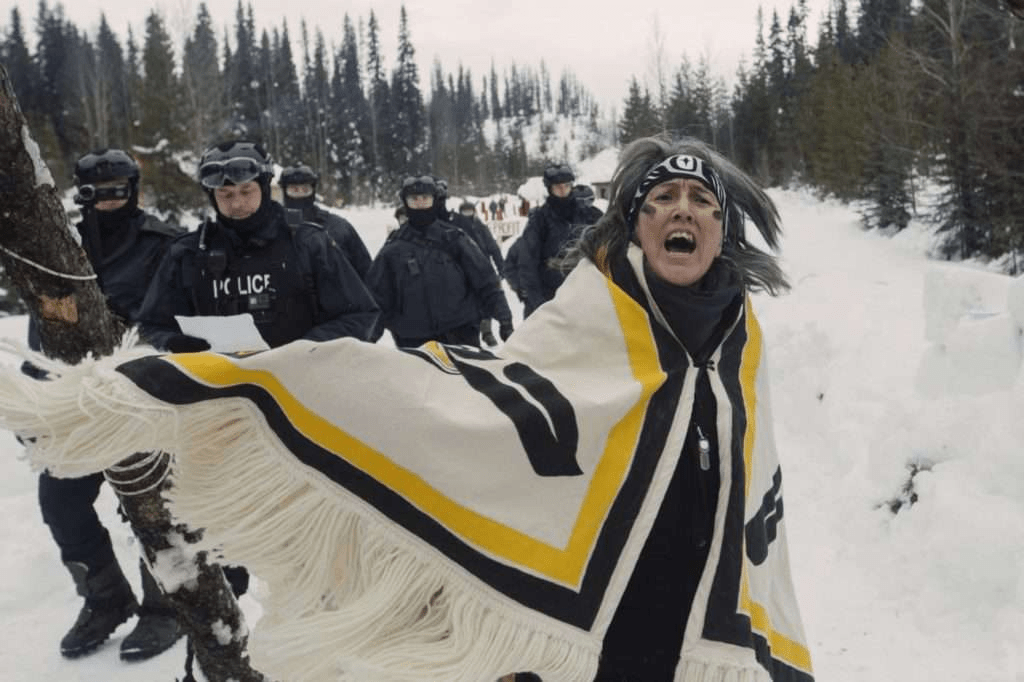
Amber Bracken / The Narwhal
The campaign to abolish CRU (first published in Canada’s National Observer)
C-IRG/CRU has a long track record of being impervious to criticism and failure to be accountable for unlawful conduct. As early as 2020, the BC Civil Liberties Association (BCCLA) submitted a complaint to the RCMP’s Civilian Review Complaints Commission concerning the C-IRG’s implementation and enforcement of a checkpoint and exclusion zone in Wet’suwet’en territory. The association argued the zones constituted “improper and unlawful actions” of “overbroad scope.”
Along with other organizations, the civil liberties group had to file other complaints in 2021 and 2022 to challenge these same tactics at Fairy Creek, Argenta and Johnsons Landing Face. In 2021, logging company Teal-Cedar’s request to extend its injunction against Fairy Creek activists was denied by the judge, citing “substantial infringement of civil liberties” conducted by the C-IRG.
By 2022, the Civilian Review Complaints Commission had received about 500 complaints in areas where C-IRG is active. Only a handful were ever investigated. The Gidimt’en clan of the Wet’suwet’en Nation filed a civil suit that year against the RCMP, the justice minister, and CGL’s private security force, Forsythe Security, alleging hundreds of incidents of C-IRG harassment, including theft, intimidation, surveillance, targeting, and unlawful arrests in their camp. Journalists also filed a lawsuit against the RCMP that targeted C-IRG operations.
In March 2023, the Civilian Review Complaints Commission announced a systemic review of C-IRG, bowing to pressure from land defenders at Fairy Creek, Wet’suwet’en, and Argenta Landing.
The Abolish C-IRG coalition released a letter criticizing the weak process and demanding an immediate suspension of the force while the review was underway.
International human rights bodies have also seemed unable to elicit any kind of accountability for C-IRG from the federal and provincial governments. The United Nations has issued three rebukes against the governments of Canada and BC, alleging the police “have escalated their use of force, surveillance, and criminalization of land defenders to intimidate, remove and forcibly evict Secwepemc and Wet’suwet’en Nations from their traditional lands.” The UN Special Rapporteur on the rights of Indigenous Peoples also released a scathing report on the use of police forces in Wet’suwet’en territory.
Unlike the use of the GSB command structure in other “emergencies” and “major incidents,” which usually have clear start and end points, C-IRG’s mandate for enforcement extends as long as projects are seen to be at risk of disruption from opponents. The Trans Mountain injunction, for example, dates back to 2014 when the company Kinder Morgan still owned it.
The call to abolish C-IRG is also a demand to reframe Indigenous land defence and climate activism as “emergency” police matters. These are urgent political issues, not issues for injunctions to resolve.
2. Private Security
“Private security” refers to any actor that is not a public law enforcement agency and is responsible for protecting a corporation, organization, individual, property, information or facility from harm, loss or crime. In a private sector industry context, companies use private security to protect their “critical infrastructure” from perceived threats of “terrorism,” “sabotage” and “espionage” through systems of monitoring, detection, assessment, and physical response to such “threats.” Private security companies collaborate and communicate with RCMP units like CRU-BC to enforce injunctions in two ways: by using direct physical force against land defence actions impacting industrial projects and by surveilling, information gathering, and planning responses to land defenders.
Forsythe Security and DOMCOR Security are the private security companies who assisted CRU-BC in enforcing the Coastal Gaslink pipeline (CGL) injunction against Wet’suwet’en land defenders. In relation to land defence actions challenging CGL, CRU-BC had a role in sharing information with industry and private security relating to construction activities and for the purpose of “ensuring operational awareness and planning.”
In addition, the RCMP directed private security companies to collect data on land defenders, create profiles on them, document their movements through helicopter and plane surveillance, identify whether they “belong” or “do not belong” on the land, and send that information to CGL and the RCMP.
Private security installed security cameras and fences on Wet’suwet’en territory, and refused access to and threatened to arrest Wet’suwet’en Hereditary Chief Na’moks. Beyond physical support, intelligence-gathering and surveillance, private security engaged in analyzing and assessing threats, and also played a role in persuading the RCMP (including CRU-BC) to enforce the injunction.
More recently, the court in the 2021 Ada’itsx/Fairy Creek case determined that the RCMP prompted the logging company to apply to the BC Ministry of Forests to erect security gates in areas around the Tree Farm License.
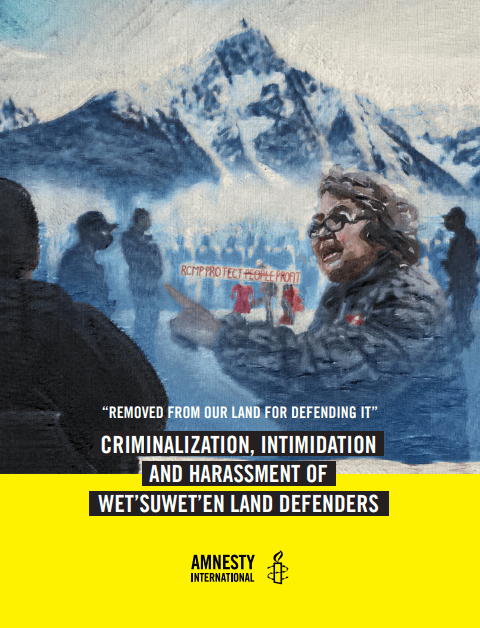
Amnesty International released a 2024 report in which Wet’suwet’en land defenders described their experiences with private security companies like Forsythe Security. The land defenders described a situation where Forsythe Security and CRU-BC intimidated, harassed, followed and watched the movements of Wet’suwet’en land defenders and community members around their residences and other parts of the community, unlawfully acted outside their authority by exercising policing powers, made sexist remarks towards Wet’suwet’en women, and engaged in racist behaviour such as monitoring and interfering with their cultural practices.
The strategies and actions of private security actors in the context of land defence actions demonstrate an intertwined relationship between state actors, industry and private security firms in the sphere of injunction enforcement. Collaboration and communication between CRU-BC, private security firms and extraction companies blur the line between ‘public’ and ‘private’ security, which demonstrates the significant power and influence those private entities, who do not have legislatively granted powers, have over controlling, tracking and criminalizing Indigenous land defenders.
3. Exclusion Zones
Exclusion zones are created by law enforcement to restrict people from entering certain geographical areas. This section examines the definition, creation, and impact of exclusion zones, and explains how police are using exclusion zones as part of the enforcement of injunctions. Exclusion zones in the land defence context have specific impacts on Indigenous peoples because they have the potential to block Indigenous people’s access to their land and resources. They are often used in conjunction with injunctions.
What are Exclusion Zones?
Exclusion zones are geographical areas where police block public access. The term exclusion zone can be used interchangeably with other terms such as “no go zone” or “buffer zone.” The RCMP have also used the terminology “temporary access control area”. While exclusion zones may take on different names, they are all created for the same general purpose: to restrict access to a geographical area.
How are Exclusion Zones Created?
In Canada, no specific written law permits the creation of exclusion zones to manage large public order events. For example, in the Criminal Code there are sections addressing riots or breaches of the peace but exclusion zones are not specifically referenced as a means of control. Powers to enforce exclusion zones are referenced in emergency law and a federal statute on intergovernmental conferences but the applicability of these laws is limited and generally unclear in scope.
Police do not have authority under the common law to create large exclusion zones. Instead, police often refer to the law that imposes general duties on them and certain powers to fulfil those duties as their authority to create exclusion zones. Police derive these powers from various statutes and the common law. The common law duties of police are “the preservation of the peace, the prevention of crime and the protection of life and property.”
In circumstances where a police officer has interfered with a person’s liberty (such as excluding them from entering public property using exclusion zones), the court has applied a two-part test to determine if the police’s conduct is within their common law ancillary powers. The test asks:
- Does the police conduct fall within the general scope of any duty imposed on the officer by statute or common law; and
- If yes, considering the facts in totality, did the execution of the police conduct in question involve a justifiable use of the powers associated with the engaged statutory or common law duty?
Two commonly cited police duties to facilitate exclusion zone enforcement are the duty to prevent crime and the duty to preserve the peace. The reasonableness of using an exclusion zone depends upon factors such as the size of the zone, who was excluded, why they were excluded, and the duration of the exclusion. These factors help weigh the competing interests of the police duty and the liberty interests at stake to determine if the police conduct was lawful.
But these discretionary powers are often abused. As the BC Civil Liberties Association’s complaint regarding exclusion zones in Wet’suwet’en territory (during the conflict against the CGL pipeline) argued:
We have serious concerns about the overbroad scope as well as inconsistent and arbitrary exercise of RCMP discretion in Wet’suwet’en territories. The RCMP implementation and enforcement of the exclusion zone criminalizes and impedes the movement of Wet’suwet’en people, invited guests of the Wet’suwet’en, media, legal counsel as well as food and medical supplies. RCMP interference with individual liberty is significant, arbitrary, and disproportionate to achieving the stated goal of public safety. Further, the RCMP 2 checkpoint and exclusion zone is in clear violation of constitutionally recognized Anuk‘nu’at’en (Wet’suwet’en law) as well as the Canadian Charter of Rights and Freedoms
A systemic review was launched by the RCMP’s Civilian Review Complaints Commission, which issued a serious rebuke.
How are Exclusion Zones and Injunctions Related?
Exclusion zones are intricately related to injunctions. Certain injunctions may make explicit reference to the use of exclusion zones. Police commonly use exclusion zones (whether referenced in the injunction or not) as part of their strategy to enforce injunctions. Examples of the use of exclusion zones as part of injunction enforcement include:
- The Fairy Creek area where RCMP restricted access to “the injunction area by means of expansive exclusion zones and checkpoints.”
- On Wet’suwet’en territory, where exclusion zones were implemented for journalistic observers and land defenders trying to stop a tunnel for a pipeline being drilled under the Morice River.
What is the Impact of Exclusion Zones
In the context of land defence, the purpose of exclusion zones is to protect private property such as construction equipment and to keep infrastructure and work free of defenders. The enforcement of exclusion zones by police may lead to additional conflicts between the state, individuals, and communities seeking access to the geographical area. Such conflicts may escalate and result in criminal charges such as criminal contempt in court. Exclusion zones may also have significant impacts on fundamental rights including “freedom of movement, freedom of expression (including freedom of the press), and freedom of peaceful assembly.” Exclusion zones may also interfere with Indigenous people’s ability to access their territories and carry out activities that are important to their societies and laws of governance.
Are Exclusion Zones Always Legal?
Importantly, just because an injunction is granted, does not mean expansive exclusion zones are always lawful when used to enforce the order, as seen in the Fairy Creek caselaw. Examples of where exclusion zones are illegal include blocking vehicle access to public areas and restricting media access and movement where these actions are not reasonably necessary for the fulfillment of lawfully asserted police duties. We could add that where they infringe Indigenous rights, they are also unlawful. Since the law on exclusion zones is somewhat unclear, there is some valid concern that police powers may lack accountability, review, and a knowable standard when it comes to the implementation of exclusion zones. Similarly, police are left to deal with complex problems without a clear lawful standard in the execution of exclusion zones.
Protest Policing in BC
Activists and land defenders in BC should be aware of the Crown Counsel Policy on Civil Disobedience and Contempt of Related Court Orders (CIV 1).
The Policy provides guidance to provincial prosecutors (Crown Attorneys, often referred to as just “the Crown”) on how they should exercise discretion when deciding whether to charge or prosecute acts related to the law of protest. The Policy describes situations when the Crown can pursue criminal contempt charges for acts relating to the law of protest, when the Crown can and cannot be involved in proceedings related to the law of protest, and when the Crown should pursue charges under the Criminal Code.
Factors that favour prosecution include: violence resulting in physical harm, serious property damage, disruptions to the public access to or enjoyment of lawful public activities, and assault of an officer. When a group of individuals occupy an office or building, the Crown is encouraged to consider pursuing criminal prosecution if the occupation becomes serious or impossible to resolve or poses a danger to individuals inside a building, among others.
There are other circumstances where the Crown may advise parties to seek legal advice for pursuing civil contempt proceedings. These circumstances include when an act concerning the law of protest affects a small number of individuals, when individuals continue that act after a judge grants an injunction, or when the act does not lead to public disrespect for the administration of justice.
The Policy also states that the Crown must pursue charges for criminal contempt when an individual or group’s refusal to obey a court order, such as an injunction, encourages disrespect for or interferes with the administration of justice. The Crown must consider the following factors when considering whether to pursue charges for criminal contempt or under section 127 of the Criminal Code: the gravity of conduct, seriousness of the sentence, and availability of court dates.
The Policy states that the Crown must take over proceedings for prosecution when an offence meets charge assessment standards. It also allows the Legal Services Branch of the Ministry of Attorney General to apply for an injunction when a ‘civil disobedience’ action is large, widespread, affects a larger sector of the public, or affects public property (i.e., highways, waterways).