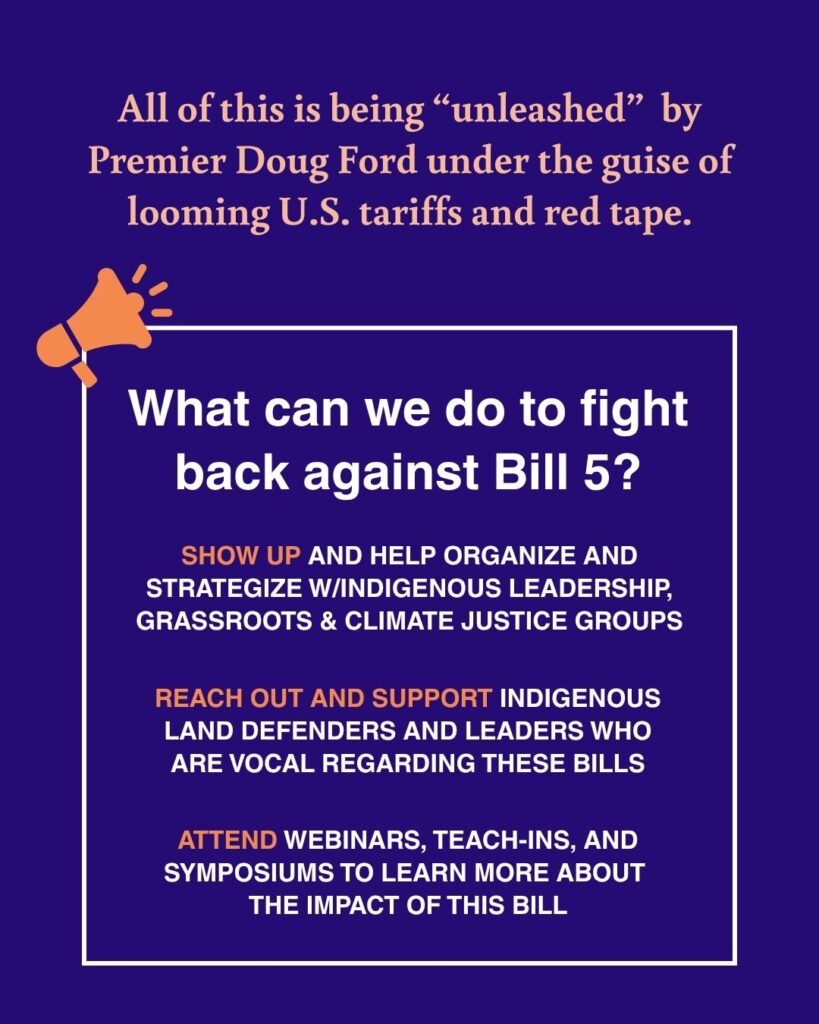
Under the guise of looming U.S. tariffs and red tape, Premier Ford has unleashed a wave of social and ecological threats in Ontario with the enactment of this omnibus bill. The legislation aims to fast-track “development” and mining by creating new statutes and amending others, allowing for the creation of lawless zones that bulldoze environmental protections (severely limiting protections for species at risk), Indigenous rights, municipality by-laws, and labour standards. This is the most dangerous and undemocratic act the Ontario Legislature has ever passed.

Breakdown:
1. Special Economic Zones Act (SEZ Act)
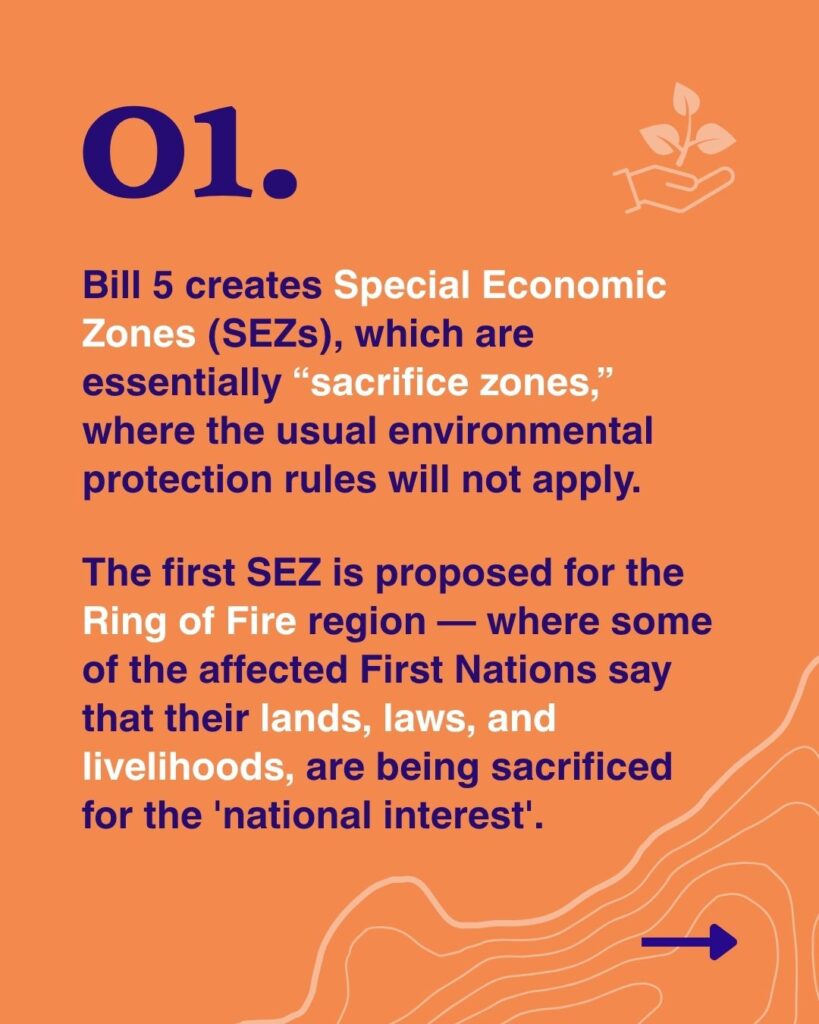
This new Act grants the Ontario Cabinet sweeping powers to create “Special Economic Zones” (SEZs) where any provincial or municipal law —environmental, labour, or otherwise— can be suspended. This can apply to any project (“designated projects”), person, or business (“trusted proponents”). No criteria are defined for who qualifies; rules can be changed by regulation at the Minister’s whim. The legislation also insulates the Government of Ontario from liability should any of this go wrong and cause harm.
In particular, SEZs can override:
- Environmental Protections: water pollution limits, bans on dumping waste, land use planning rules
- Biodiversity Protections: prohibitions on destroying endangered species habitat
- Labour Laws: wage laws, health and safety rules
- Heritage Protections: rules governing the protection of cultural and spiritual sites that are sacred to Indigenous peoples
Many of these laws contain specific processes that may trigger Crown consultation with Indigenous peoples. In bypassing these statutory requirements, Ontario effectively removes avenues for consultation. This will lead to direct infringements of Aboriginal and Treaty rights.
SEZs can be sited anywhere and be of any size. No restrictions are outlined in the legislation. Proposed locations that have been floated by Ontario include critical minerals mining in the so-called “Ring of Fire” (5,000 km²), nuclear expansions, a new James Bay Deep Sea Port, a Highway 401 Tunnel, and GO train Expansion.
2. Endangered Species Act → “Species Conservation Act”
Replaces the Endangered Species Act with the weaker Species Conservation Act.
The government can ignore the species classifications by the Committee on the Status of Species at Risk, which uses Indigenous and settler scientific knowledge to determine which species need protections.
Developers no longer need to replace the habitats they destroy and harassment of endangered species is no longer explicitly prohibited.
The government will no longer have to prepare recovery plans or progress updates for species at risk, denying Indigenous Nations vital information on project impacts.
Permits for harming species at risk are replaced with a self-registration system, allowing activities that harm species to proceed without oversight.
“Habitat” is redefined to only include dwelling areas like nests and dens, removing protections for feeding areas, breeding grounds, and migration routes.
These changes gut protections and make it harder to stop destructive development.
3. Mining Act Amendments
Enables the shortening of the provincial mine approval process from 4 to 2 years – Leaving Indigenous Nations and rural municipalities with less time to gather the information needed to participate in consultations, making the consultation process less meaningful and less likely to address impacts on Indigenous Peoples, and neighbouring communities.
The Minister gains expanded power to approve any mining project and the requirement for recovery for mining proponents is removed.
4. Ontario Heritage Act
This legislation allows proponents to be exempted from ensuring protections related to archaeological sites without oversight if it advances what the government deems a ‘priority’.
These exemptions permit archeological sites (e.g., Indigenous villages, hunting camps, burial sites) to be disturbed without a license and exempts proponents from needing to conduct an archeological assessment at known and potential archeological sites.
This has the potential of putting at risk burial sites, Residential School sites, and other locations of archaeological significance.
5. Other Key Legislative Changes
Environmental Assessment Act: The amendments would remove the need to conduct environmental assessments for two projects that have the potential for massive environmental impacts: Eagle’s Nest Mine impact in the Ring of Fire and waste disposal facility proposed by York 1 in Chatham-Kent.
This prevents the ability to study, understand, and mitigate the full environmental and rights impacts of these projects.
Ensures the Environmental Bill of Rights does not apply to the Ontario Place Redevelopment Project.
6. Limiting Oversight and Legal Remedies
Concentrates power in Cabinet, sidelining the legislature, expert bodies, environmental tribunals, and municipal governments.
Curtails avenues for challenging government actions by allowing requirements for environmental reviews or heritage assessments to be bypassed.
Shields the Government from liability by enacting broad provisions that remove Crown liability—this liability protection may extend to corporations in SEZs.
7. Impact on Indigenous Peoples and Treaty Rights
This omnibus bill violates treaty rights and undermines the Crown’s duty to consult. By removing the need for permits and regulatory approvals, the legislation decreases the number of decisions that trigger the Duty to Consult.
It significantly reduces protections for culturally significant species like boreal caribou.
Corporations are supported and Indigenous Nations are excluded and charged with monitoring land, launching legal challenges, and covering the costs of defending rights. Moreover, they will be faced with increasing health hazards due to inadequate requirements for environmental cleanup.
Dismantling Environmental Protections will have a cumulative impact on Indigenous Peoples ability to exercise their rights and maintain their ways of life.
This raises the bar and limits the ways Indigenous Peoples can challenge this legislation and treaty violations leaving only constitutional challenges and judicial review.